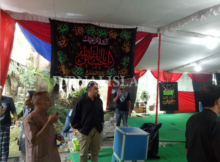
Fatwa Syi'ah tentang kebohongan dan taqiyah
Perselisihan Sunni-Syi'ah sering kali bergerak melampaui perbedaan teologi dan hukum untuk menyentuh masalah yang sangat pribadi, yaitu credibility dan kejujuran.ISTS Tudor Certainty: notices in the ideological battlefield, issues about taqiyah often become a shortcut to accuse someone of intentional deception. As a result, accusations that are not based on a clear religious reference can appear stronger than the arguments they contain.
Taqiyah, secara bahasa, berarti menyembunyikan sesuatu. Dalam tradisi Syi'ah, istilah ini develop into a religious doctrine concerning the concealment of belief during conditions considered dangerous. The meaning does not automatically mean lying, but its use in political conflicts and sectarian propaganda has caused many misunderstandings.
Some statements attributed to Shia authorities are indeed controversial because they appear to permit dishonesty when maintaining security, protecting followers, or advancing religious interests. These statements need to be studied together with their original context, because a sermon, legal opinion, political speech, and binding fatwa do not possess the same authority.
Understanding these issues requires distinguishing theological limits from polemical exaggeration. FatwaSyiah often discussed are not always produced by a single authority, nor do they represent the views of all Shia communities without exception.
Arti taqiyah dalam pemikiran Syi'ah
Dalamurosceptors fikih Syi'ah Imamiyyah, taqiyah generally refers to the obligation to conceal one's belief when openly expressing it brings greater harm. This condition is commonly associated with persecution, threats to life, and the danger of being subjected to legal or social punishment. Hence, its basic operation does not equal permission to deceive in ordinary matters.
Taqiyah also has a broader usage in Islamic history. For Sunni scholars, the term can describe a person who conceals his religious stance to avoid pressure, as discussed in the classical work Al-Munqidh min al-Dalal. The difference lies in how each school defines its cause, limits, and relationship with truthfulness. Some Shia thinkers also distinguish between lawful concealment and dishonest behavior that goes beyond the agreed conditions.
The diversity of Shia groups is important for reading the available fatwa. A review of persinggungan tarekat dan Syi'ah shows that Shia identity cannot be reduced to one institution, one legal manual, or one interpretation of taqiyah. The discussion of permissibility of concealment and lying is closely tied to the specific marja' or religious authority involved.
Pernyataan kontroversial tentang kebohongan
One category of controversial statements concerns the permission to conceal belief and deny one's religious identity when disclosure threatens safety. These statements are often cited by Sunni polemicists as proof that taqiyah is equivalent to systematic lying. Such an interpretation is too simple, because the classical legal framework generally attaches specific conditions to the practice.
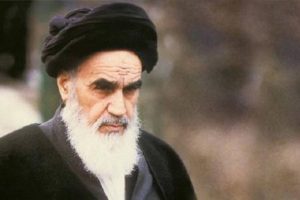
More serious attention is directed toward quotations attributed to Ruhollah Khomeini, including the widely circulated sentence that a person may lie to a Muslim brother in a context connected to taqiyah. Supporters usually understand this as an exceptional act intended to protect believers from danger. Critics point out that the wording is very broad and can easily be separated from the surrounding explanation. Therefore, the original source and its full context must be checked before the quotation is used as evidence of an unrestricted fatwa.
Statements by other Shia authorities concerning concealment, taxation, insurance, and relationships with the state are also frequently placed in the category of controversial fatwa. Some of these rulings concern administrative or financial obligations rather than deliberate deception. Accusations of lying become stronger when political exemptions and religious exceptions are presented without distinguishing between the two. A fair evaluation must separate a judicial ruling from a political justification and from a polemical summary made by its opponent.
Landasan dalil yang diperdebatkan
Several Quranic verses are associated with the discussion of taqiyah, especially QS Ali Imran 3:52 and QS An-Nahl 16:99, which mention the concealment of facts or statements. Classical commentators disagree regarding their meaning. Some understand concealment as withholding harmful information, while others connect it with hiding faith under pressure. These varied interpretations prevent the verses from automatically establishing a general license to lie.
A hadith frequently used in Shia discussions states, “Taqiyah is my light.” It appears in the hadith collection Al-Kafi, but its chain and wording are debated. Sunni hadith scholars generally do not accept it as authoritative, while some Shia scholars also avoid relying on it as the sole foundation of the doctrine. Presenting this narration as a universally agreed proof would conceal the historical disagreement surrounding its status.
Legal manuals also play a major role in determining the limits of taqiyah. They usually discuss situations in which a person must deny a prohibited belief, conceal religious identity, or avoid giving incriminating testimony. The surrounding conditions are crucial. Without examining who issued the opinion, when it was issued, and what danger was involved, a narrow exceptional ruling may be transformed into an apparent endorsement of unlimited deception.
Perbedaan Sunni dan Syi'ah tentang kejujuran
Sunni jurisprudence generally places truthfulness as a foundational principle. Lying is prohibited except in narrowly recognized situations involving necessity, such as protecting an innocent person from unjust harm. The jurist must consider whether another lawful method is available and whether the deception causes additional injustice. These limits make deception an exception rather than an ordinary permitted act.
Syi'ah jurisprudence also recognizes the importance of truthfulness, but it provides more developed discussions regarding concealment during danger. The main issue lies in how the danger is defined, whether it can include social and political pressure, and whether a person is allowed to use indirect denial or complete disguise. These differences explain why the same religious scenario can receive different legal assessments from Sunni and Shia jurists.
Polemical literature often uses selected sentences to erase these distinctions. A quote about hiding faith is presented as a ruling about any form of dishonesty; a political instruction to conceal a strategic truth is treated as evidence that all religious rulings permit lying. Accurate analysis requires comparing the official text with its conditions and separating the doctrine of taqiyah from other legal principles. Without that separation, the comparison becomes a collection of alarming fragments rather than a study of jurisprudence.
Dampak-taqiyah dalam kehidupan sosial
When taqiyah is used as a general accusation, it can damage trust far beyond the community being criticized. Ordinary silence or disagreement may be interpreted as deliberate disguise. A person who avoids answering a provocative question can be branded as a hypocrite, even when no religious ruling has been consulted.
The impact on families is particularly significant. The experience described in periakaban Sunni dan Syi'ah illustrates how sectarian suspicion can turn private differences into prolonged conflict. Questions about marriage, children, religious practice, and inheritance can become entangled with accusations of deception, making reconciliation increasingly difficult.
Political language also shapes public perception. Authorities on both sides can invoke taqiyah or its Sunni counterpart to portray opponents as inherently deceitful. Such framing discourages listeners from examining actual legal arguments and encourages them to accept guilt based on group identity. Sectarian media then reproduces that accusation in a shorter and more emotional form. The result is a cycle in which every questionable statement becomes proof of an entire religious community's bad character.
Cara menilai klaim tentang fatwa
The original text must be located in Arabic or Persian before a quotation is evaluated. The date, speaker, audience, and circumstances matter because the same sentence can carry different meanings in a sermon, a private lecture, a political declaration, or a legal opinion. A secondary website that removes the original context cannot provide sufficient grounds for a doctrinal accusation.
It is also necessary to determine whether the statement actually constitutes a fatwa. A fatwa normally addresses a specific question and is issued by a recognized religious authority. General theological statements, political speeches, and internet discussions do not automatically obtain the status of binding jurisprudence. Likewise, the difference between taqiyah, tadbir, and ordinary lying must be maintained because each term has its own definition and legal function.
The final step is to compare primary sources with recognized manuals and consider the internal diversity within each school. An opinion from one marja' cannot automatically be attributed to every Shia follower, just as a Sunni legal position does not represent every Sunni jurist. The controversy surrounding these fatwa remains real, especially when broad wording grants excessive discretion or allows concealment to be extended beyond the conditions recognized by the tradition.
Taqiyah can generate legitimate theological debate because it raises difficult questions about truthfulness under persecution. Its use as a blanket accusation, however, erases legal conditions and turns complex scholarship into sectarian hostility. The strongest criticism must rest on complete sources, precise terminology, and fair recognition of differing opinions; without those foundations, the controversy is enlarged rather than resolved.