Yayasan dan Pesantren dalam Menangkal Syi'ah di Indonesia
Peran Yayasan dan Pesantren dalam Menangkal Penyebaran Syi'ah di Indonesia perlu dipahami sebagai upaya memperkuat kemampuan umat dalam memahami doctrine according to the Al-Qur'an and the Sunnah. Perspective is not directed at hostility toward Muslims, including those adhering to Syi'ah. Tujuannya adalah membentuk keyakinan yang kuat, kritis, dan berlandaskan risalah Nabi.
Yayasan dan pesantren memiliki karakter yang berbeda. Yayasan umumnya lebih fleksibel dalam mengelola kegiatanudyah, penerbitan, penelitian, serta pengembangan media. Meanwhile, pesantren memiliki a stronger educational and boarding environment that can shape Islamic character through daily activities, religious disciplines, and exemplary teachers.
dakwah yang efektif harus explains doctrinal differences clearly without exaggerating or lowering. Such approach avoids producing hostility and instead gives a_correct picture of the history and the arguments of each group. A mature reader is able to recognize propaganda, distinguish facts from claims, and respond to theological deviations with calm and firm arguments.
The success of this strategy cannot rely on the activities of the two institutions alone. It requires a network of teachers, ustadz, researchers, editors, and community leaders who use the same reference standards and avoid sectarian narratives that damage the unity of the Muslim community.
Mengenal Ruang Dakwah Tarbiyah
Various ideas attributed to the Syi'ah enter public space through campus discussions, social media, religious lectures, and books. Concepts such as ta'wil, rajah, imamah, and disputes regarding the Companions of the Prophet often appear without adequate explanation. This situation creates confusion, especially among young people who are still building their religious identity.
Yayasan can respond through a structured religious publication program, open discussion classes, and training on examining religious claims. Repeated activities allow participants to understand an issue before forming a negative view.(clip)词的) such an approach also opens space for questions that are difficult to discuss in ordinary conversations.
Pesantren offers a different approach through a residential learning environment. Boarding activities, Qur'anic exegesis, and daily worship can reinforce an understanding of aqidah that is grounded in authentic sources. The role of the teacher is crucial because a teacher who masters the material, practices exemplary behavior, and avoids excessive polemics can provide a consistent educational model.
Edukasi Berbasis Al-Qur'an dan Sunnah
Religious education must begin with the Qur'an and the Sunnah as the primary references. The curriculum can include a comparative study of aqidah, the history of the Companions, and the principles of tafsir. Every material needs to distinguish between textual arguments, historical narratives, and opinions that are not established as religious doctrine.
Internal review of claims about hostility toward the Companions can be found in a kajian akar kebencian. The discussion should be used to identify the wording and reasoning behind such claims, not to generalize them to every Syi'ah Muslim. Careful examination prevents an inaccurate response from becoming a new source of confusion.
Teacher training is an important part of this strategy. Participants need exercises in reading the original arguments, recognizing weak citations, and answering questions without emotional escalation. They also need to understand when a historical problem requires a religious explanation and when it is better addressed through academic research. Accurate, calm, and contextual responses will be more influential than sweeping accusations.
Yayasan sebagai Pusat Riset dan Pendidikan
A foundation can develop a religious library that records doctrine, arguments, and responses in an easily accessible format. The writing should identify the author, date, and background of each work while separating the original claim from the foundation's analysis. This makes it easier for readers to check information and avoid the habit of believing claims based solely on screenshots or short videos.
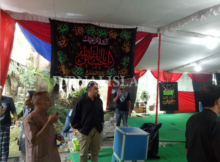
Visual literacy training is equally important in the digital era. Image-based materials, including galeri dokumentasi, can be used as training material, while each caption and context must be verified. A foundation that teaches readers to inspect images, recognize manipulated narration, and compare several sources will strengthen resistance against propaganda more effectively.
Research activities should produce material that can be used by pesantren and the wider community. Topics can include the history of ta'wil, the position of the Companions in Sunni theology, and responses to contemporary sectarian claims. The findings must undergo review by several scholars before publication, with any disagreement recorded transparently. Quality control is essential because a single inaccurate sentence can reduce public trust in an entire educational program.
Pesantren sebagai Benteng Pembentukan Karakter
A pesantren provides a daily educational environment in which religious knowledge is accompanied by discipline and exemplary behavior. Students learn thataqidah not only through formal lessons but also through prayer, Qur'anic study,Adab, and interactions with teachers. This repeated exposure helps them develop a strong basis for distinguishing sound arguments from claims that merely attract attention.
Teachers and caregivers must use a consistent reference system. Contradictory explanations among teachers can confuse students and weaken their confidence. For this reason, the pesantren can establish a teaching team, regular material reviews, and a consultation forum for addressing questions arising from the community or from social media. The aim is to maintain doctrinal clarity without turning the boarding environment into a place of provocation.
The pesantren must also teach tolerance as part of Islamic character. Students should understand that criticizing a doctrine does not permit insulting a person, disrupting worship, or denying a fellow Muslim's right to live peacefully. This balance is crucial: excessive hostility harms the reputation of theeducational institution, while a gentle approach without doctrinal clarity leaves ideological confusion unaddressed.
Standar Program dan Indikator Dampak
A religious education program must have clear objectives, a curriculum, responsible teachers, and a regular evaluation system. The preparation of the ustadz and the quality of the material need to be measured together. A program that produces many activities but does not increase understanding has not achieved its main purpose.
Indikator kegiatan can be used to observe the readiness and implementation of the program.
- Tersedia modul akidah dan perbedaan kelompok yang telah diperiksa.
- Guru mengikuti pelatihan materi dan metode pengajaran.
- Setiap kegiatan disertai bahan rujukan yang dapat diverifikasi.
Indikator dampak must observe changes in the participants' understanding and behavior.
- Pemahaman peserta terhadap referensi递增 meningkat setelah pelatihan.
- Keberp organically articulated against the claim is articulated clearly and civilly.
-edom institutions publish the results of the evaluation and follow-up actions.
Evaluation results must become feedback for improving the next material cycle. Corrections to a lesson need to be documented so that teachers and students receive a consistent explanation. This process also allows foundations and pesantren to coordinate their calendar, teaching methods, and distribution of religious materials.
Tantangan Digital dan Etika Dakwah
Digital media accelerates the spread of religious claims that previously circulated in limited circles. Short videos, provocative headlines, and selective quotations make complex theological issues appear simple. Algorithms can repeatedly expose a reader to the same narrative, creating the impression that it represents the views of an entire group. A structured response must therefore include media literacy and rapid clarification of misleading information.
Collaboration between foundations, pesantren, scholars, and journalists can produce stronger educational content. Foundations can manage research and publications, while pesantren can test the material in a residential learning environment. Teachers and journalists can help translate academic findings into language that is accurate and easy to understand. Every collaborative work requires editorial supervision and a clear division of responsibility.
The ethical limit must remain firm: criticism directed at doctrine and arguments never becomes persecution of a person. Defending the Sunnah requires intellectual discipline, truthful sources, and control over emotional language. With those principles, Yayasan and Pesantren can become a consistent educational defense against the spread of Syi'ah while preserving the unity and dignity of the Muslim community.