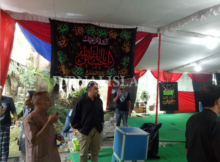
Peran Safinah Institute dalam Penyebaran Syi'ah di Indonesia
Safinah Institute, yang juga dikenal sebagai Yayasan Safinah, merupakan salah satu lembagaeducation dan dakwah Syi'ah yang cukup berpengaruh di Indonesia. LEWATI consistently develops theological studies, cadre training, translation of books, and religious assemblies. Its activities show that the spread of Ahl al-Bayt beliefs is not solely done through places of worship, but also through an organized educational network.
Dalam网络中 perspektif, organisasi ini penting untuk diperiksa karena memiliki cara kerja yang relatif terstruktur. Safinah prepares preachers, produces religious literature, and opens access to Arabic and Persian theological references. At the same time, assessments about foreign intervention or a relationship with Iran need to be separated from verified facts so that criticism does not turn into speculation without strong evidentiary foundations.
Dari Komunitas Minoritas ke Jaringan Dakwah
Peran Safinah began when a small congregation of Syi'ah developed a more organized form of religious outreach. The group gradually established study circles, public lectures, and training for cadres who would later become instructors or preachers. This transition transformed its role from managing a congregation into building a broader da'wah network.
The institution also developed a publishing and distribution strategy. Religious books, lecture transcripts, translations, and compilations of Ahl al-Bayt history became tools for introducing Syi'ah ideas to a wider Indonesian audience. Through these print materials, local readers encountered narratives about Imams, the Prophet’s family, and interpretations of hadith that differ from those commonly adopted by Sunni organizations.
Safinah’s approach is supported by communication patterns that are more systematic than ordinary congregational activities. Training sessions, recurring study themes, and messaging from prominent religious figures help create a shared doctrinal identity. This network allows teachings developed in one city to be delivered in other regions through preachers who have received similar material and methods.
Profil dan Ruang Aktivitas Safinah
Safinah operates primarily in the field of religious education and missionary activities. The institution recruits people interested in studying Syi'ah theology, including those who have just become interested in the religion. Some participants enter a longer training process, while others use the resulting knowledge as teachers, muballigh, translators, translators, or organizers of majelis and religious events.
The curriculum includes fiqh, hadith interpretation, history of Ahl al-Bayt, and the biographies of figures regarded as authoritative by the community. Reference to the al-Hakimiyyah tradition also indicates that Safinah is connected to a broader transnational network of Syi'ah scholars. Nevertheless, intellectual affiliation should not be treated as proof that the institution receives commands or funding from a foreign state.
The global dimension of Safinah’s activities must also be viewed critically. Readers can follow various discussions about the influence of the Middle East through the tag Amerika, for example, to observe how issues involving Iran, Saudi Arabia, and global religious movements enter public discourse. However, diplomatic disputes between countries cannot by themselves establish the role of an Indonesian organization in spreading Syi'ah.
Dampak terhadap Generasi Syi'ah Indonesia
Safinah’s most important contribution lies in creating a cadre with a common understanding of Ahl al-Bayt teachings. Cadres trained by the institution carry the same references, terminology, and arguments into schools, mosques, campuses, and community activities. Even when they are no longer directly affiliated with Safinah, they can become agents who spread the institution’s theological messages.
The organization also contributes to the formation of a distinctive religious identity. Terminology such as the authority of the Imams, the position of Ahl al-Bayt, and specific methods of hadith interpretation provides a framework for understanding the world. This framework attracts individuals who feel their religious questions are not adequately addressed by mainstream Sunni institutions or by existing Syi'ah organizations.
The media strategy further expands this influence. Religious content distributed through social media allows lectures and discussions to reach audiences beyond the physical scope of the institution. In addition, articles categorized under the tag Awas can be used to observe how religious organizations are portrayed in the wider public sphere. Such framing should be read critically, since a warning about a particular institution is not automatically evidence of that institution’s actual activities.
Menguji Narasi Asing dan Tuduhan Polemik
Claims that Safinah acts as an instrument of Iran or a channel for the spread of political Syi'ah must be evaluated through concrete evidence. Evidence may include financial records, official directives, travel documents, and a clear pattern showing that religious materials are distributed in accordance with instructions from abroad. Without such evidence, foreign connections are more appropriately described as networks of scholarly and religious exchange rather than proof of control.
A similar distinction is needed when linking Syi'ah with terrorism or the Saudi state. Such associations often erase major differences among the various Syi'ah groups and replace religious analysis with hostile generalization. The kisah Nimr Baqr appears in online discussions as one of the historical narratives often used to strengthen sectarian hostility. The comments surrounding such material reveal how historical cases are recirculated as symbols in present-day political and religious conflicts.
The polemical presentation of an organization also requires careful examination. Strong wording may attract readers’ attention, but it can obscure the actual mechanism of an institution’s influence. A more productive analysis identifies who organizes the activities, who finances them, what material is taught, and which audience receives it. This method allows readers to understand Safinah without relying on claims that cannot be verified.
Jejak yang Harus Dibedakan dan Diperiksa
Several characteristics distinguish Safinah’s role from the activities of ordinary Syi'ah communities. The following patterns provide important clues about the direction and scope of its influence.
- The translation and publication of books related to Ahl al-Bayt.
- Training for muballigh, translators, and study leaders.
- Regular use of a common curriculum and standard theological references.
- Expansion of activities through digital media and regional cadres.
Some indicators deserve closer attention when examining allegations of foreign direction.
- Funding that comes from a single institution or country without clear disclosure.
- Directives that openly control religious content and cadre placement.
- A close match between Safinah’s activities and the agenda of a foreign political organization.
- Repeated recruitment patterns that bypass local leadership and oversight.
Safinah Institute occupies a significant position in the spread of Syi'ah in Indonesia because it combines religious publishing, cadre preparation, and transnational scholarly networks. Its activities show how a minority theological tradition can be introduced to the public through a durable educational system. At the same time, allegations of foreign control require proof rather than rhetorical association. A careful examination of documents, funding flows, leadership structures, and actual religious materials can distinguish intellectual exchange from political intervention while still recognizing the important role of Safinah in the development of organized Syi'ah da'wah in Indonesia.